Condition guide
Understand blood-pressure concerns and preeclampsia
High blood pressure can exist before pregnancy or develop during it. Preeclampsia is a pregnancy complication that requires medical assessment and can also occur after delivery. General information cannot determine what a reading or symptom means for one person.
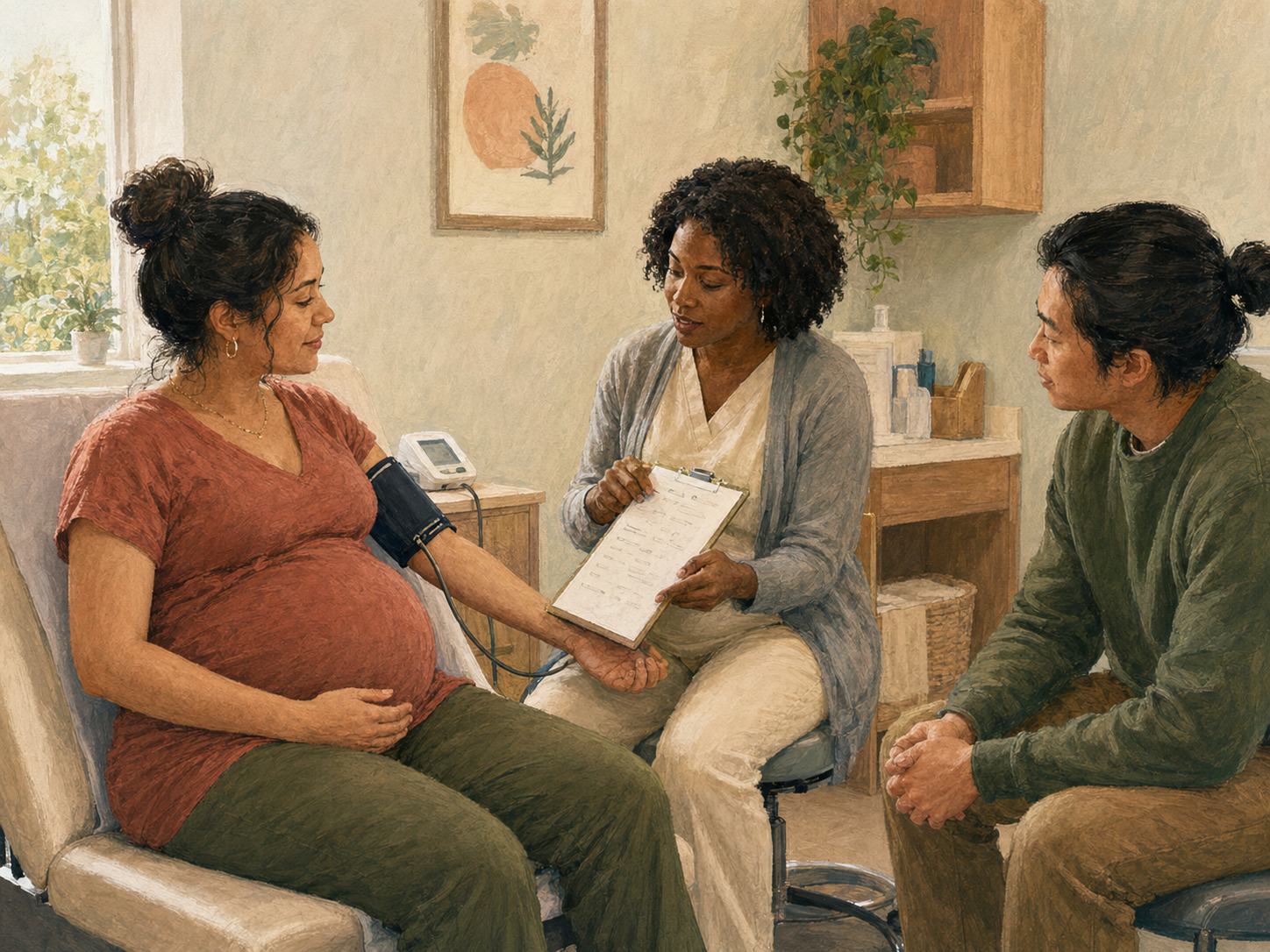
Know the name of the concern
Ask whether the team is discussing chronic hypertension, gestational hypertension, preeclampsia, or another issue. The name, timing, symptoms, laboratory results, and repeated measurements can influence the plan.
Use home monitoring only with a clear plan
If home blood-pressure checks are recommended, ask which device and cuff size to use, how to sit and rest before measuring, when to repeat a reading, and exactly which result requires a call or urgent care.
- Where and how to record readings
- Which arm and position to use
- How long to rest first
- When to repeat
- Who receives the log
Recognize urgent warning signs
A severe or worsening headache, vision changes, trouble breathing, severe belly pain, sudden swelling of the face or hands, chest pain, or other severe or sudden symptoms require prompt medical attention.
Ask what additional monitoring is intended to learn
The care team may discuss blood tests, urine tests, fetal growth, movement, or other monitoring. Ask what each step is watching, how often it is needed, and what result would change the plan.
Keep the plan after birth
Blood-pressure complications and warning signs can continue after delivery. Make sure support people know the symptoms, the home-monitoring instructions if any, and the after-hours contact route.