Practical access guide
Pregnant and cannot afford healthcare? Start here
Do not wait for every insurance question to be solved before contacting prenatal care. Coverage and costs matter, but the first useful call can happen while applications and financial-assistance requests are still moving.
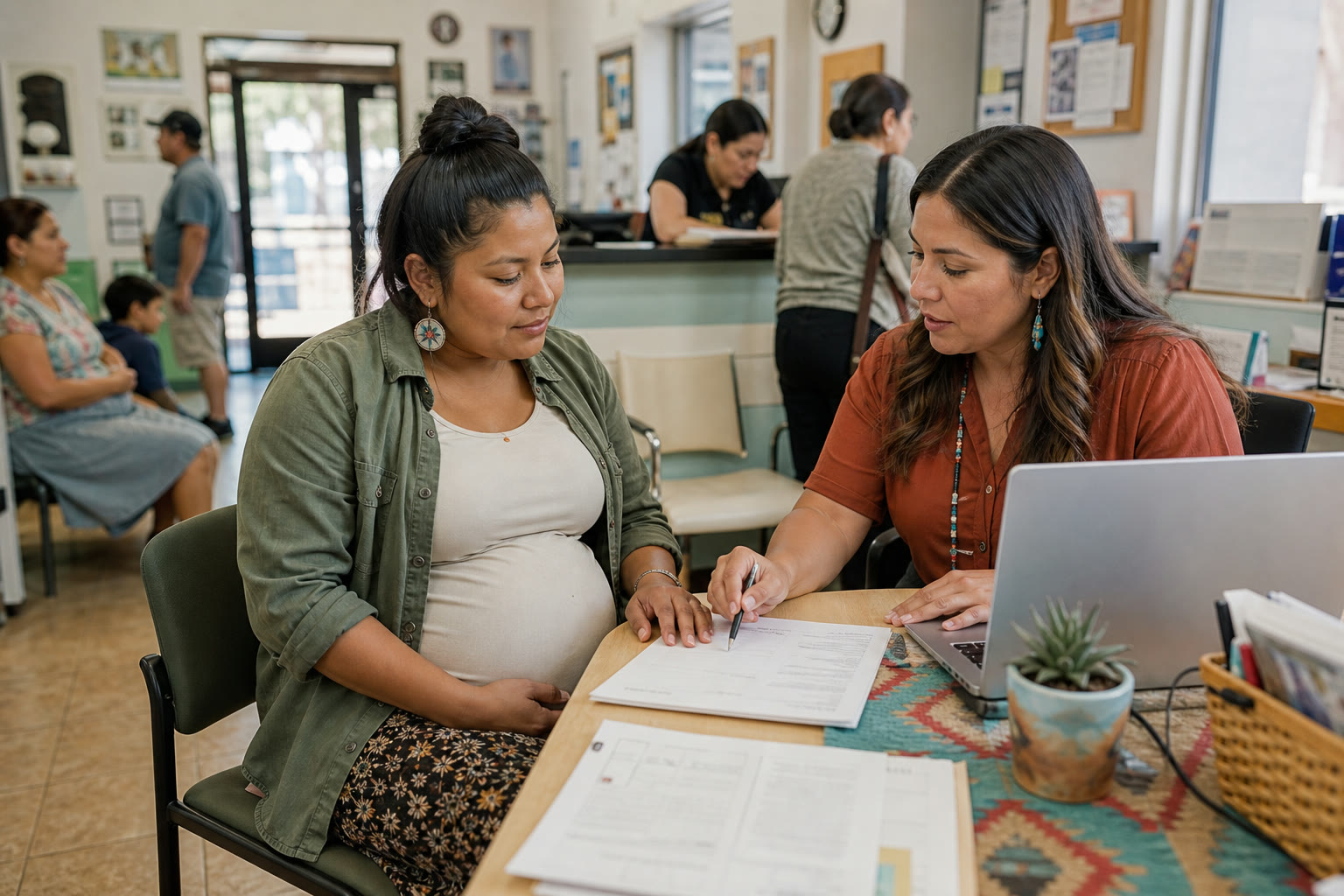
Contact prenatal care and apply for coverage at the same time
Ask a prenatal provider for the earliest visit, self-pay price, sliding-fee policy, and enrollment help. Apply for Medicaid or CHIP even if you are unsure you qualify; pregnancy can change eligibility and applications are accepted year-round.
Ask your state or clinic about presumptive eligibility, which may provide temporary outpatient prenatal coverage while a full application is processed. Availability and covered services vary by state.
Use a health center as a care and enrollment doorway
HRSA-funded health centers serve patients regardless of ability to pay and adjust fees based on income and household size. Use the federal locator, then call to confirm that the site provides prenatal care or can connect you to it.
Ask whether lab work, ultrasound, specialists, hospital delivery, anesthesia, and newborn services are included. Outside organizations may send separate bills even when clinic visits use a sliding fee.
Add food, transportation, and local support
WIC provides nutritious food, nutrition education, feeding support, and referrals; it is not health insurance or prenatal medical care. Healthy Start, Title V programs, community-health workers, and local public-health departments may help with care coordination.
Call 211 for local food, housing, transportation, utility, and health referrals. Treat 211 as navigation support—not an insurer, eligibility authority, or emergency service.
Ask hospitals about assistance before taking on debt
Ask the hospital for its written financial-assistance policy and application before using medical credit or accepting a payment plan. Tax-exempt hospitals must maintain assistance policies for eligible emergency and medically necessary care, but eligibility and covered bills vary.
Ask whether the obstetric clinician, anesthesiologist, radiologist, laboratory, newborn clinician, and other independent groups are included. Keep copies of applications, bills, itemized statements, and names of people you spoke with.
Emergency symptoms and active labor should not wait
Hospitals must provide an appropriate medical screening exam and stabilizing treatment for an emergency condition, including active labor, regardless of ability to pay. A bill may still follow, so this right is not a substitute for routine prenatal coverage.
Call emergency services or go to an emergency department for severe or sudden symptoms. Tell staff that you are pregnant or were pregnant within the past year.
- Do you provide prenatal care and accept new patients?
- What is the earliest appointment and self-pay price?
- Are labs and ultrasound included?
- Can you help with Medicaid or presumptive eligibility?
- Which delivery and newborn bills will be separate?
- Are interpreters or transportation available?