A calm start
Prepare for your first prenatal appointment
A first prenatal visit is partly medical assessment and partly orientation. You do not need to arrive knowing the system. A short history and question list can make the time more useful.
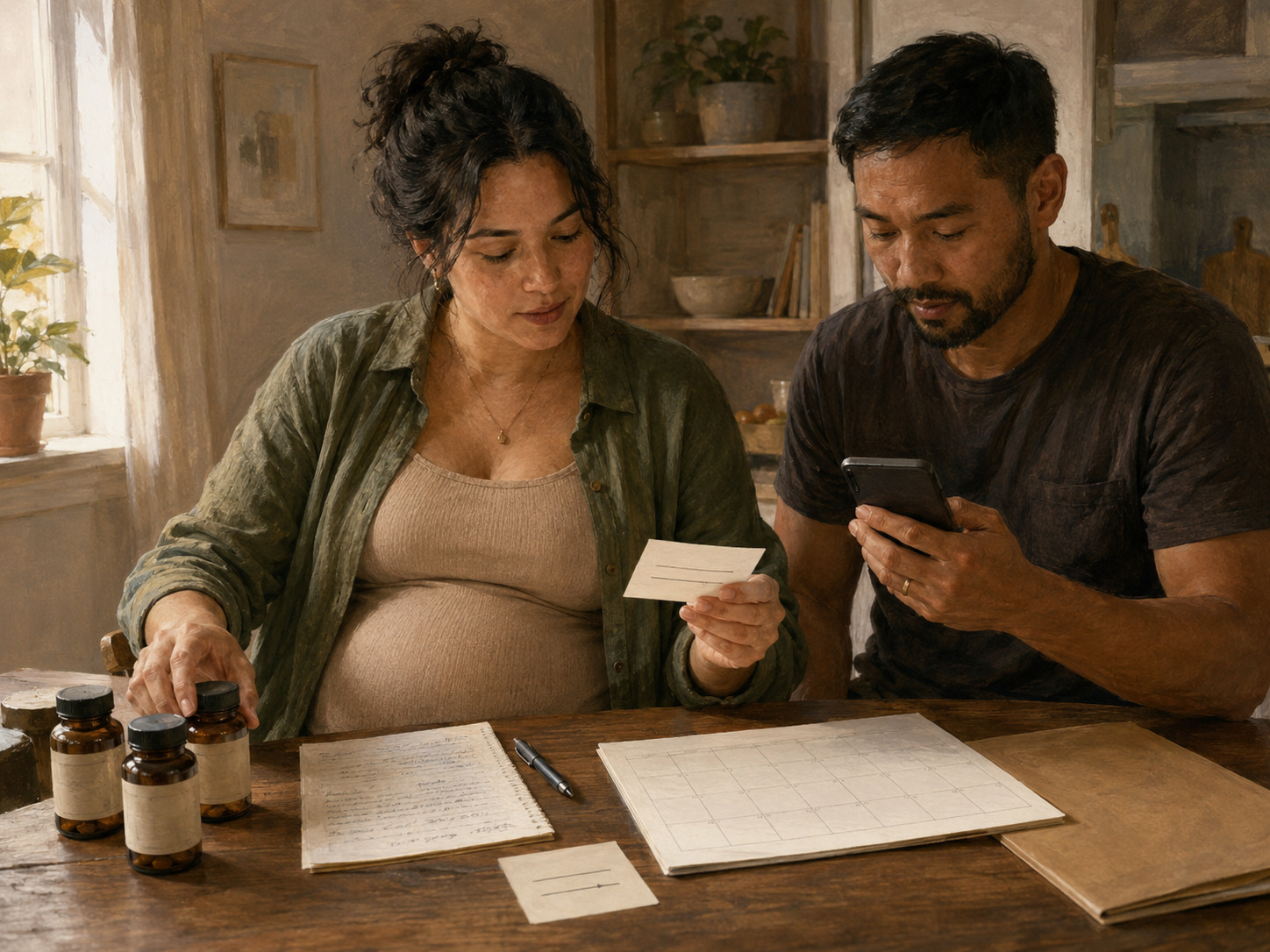
Bring the information that is hard to recall
Write down current medicines and supplements, allergies, health conditions, prior pregnancies, surgeries, and the first day of your last menstrual period if known. Include the contact information for clinicians whose records may matter.
- Medication names and doses
- Personal and family health history questions
- Dates or records from prior pregnancy care
- Your preferred pharmacy and emergency contact
Expect conversation, not one universal script
The visit may include a physical exam, urine or blood testing, ultrasound, or scheduling for later tests. Timing depends on gestational age, health history, symptoms, local practice, and access.
Leave with a contact plan
Before the visit ends, know how to reach the team during office hours and after hours. Ask which symptoms warrant an immediate call and where to go if you cannot reach them.
- Next appointment and its purpose
- How results will be shared
- Who answers urgent questions
- Any time-sensitive decisions
Make room for the questions people often forget
Ask how pregnancy dating will be established, how results are delivered, whether an interpreter or accommodation is available, and what decisions have a time window. If the pregnancy was unplanned, emotionally complicated, or follows loss or infertility, you can say what kind of language feels supportive.
A visit can feel rushed even when the care is good. Put the two questions you most need answered at the top of your note and tell the clinician they are your priorities.
- How and when will I receive results?
- Which decisions are time-sensitive?
- What should prompt a routine message, a same-day call, or urgent care?
- What should I prepare before the next visit?
What varies from one practice to another
The timing of the first visit, ultrasound, laboratory testing, genetic screening conversations, and visit schedule can differ by health history, symptoms, local practice, insurance, and availability. A difference from a friend’s care does not automatically mean something has been missed.