Conversation guide
Make safer medicine and supplement decisions
Medicine decisions in pregnancy often involve balancing the risks of a medicine, the risks of an untreated condition, the timing of exposure, and the available evidence.
Do not turn a general list into a personal verdict
Online lists often remove the dose, timing, reason for use, medical history, and alternatives that shape a real decision. Use general information to form questions, not to start or stop treatment on your own.
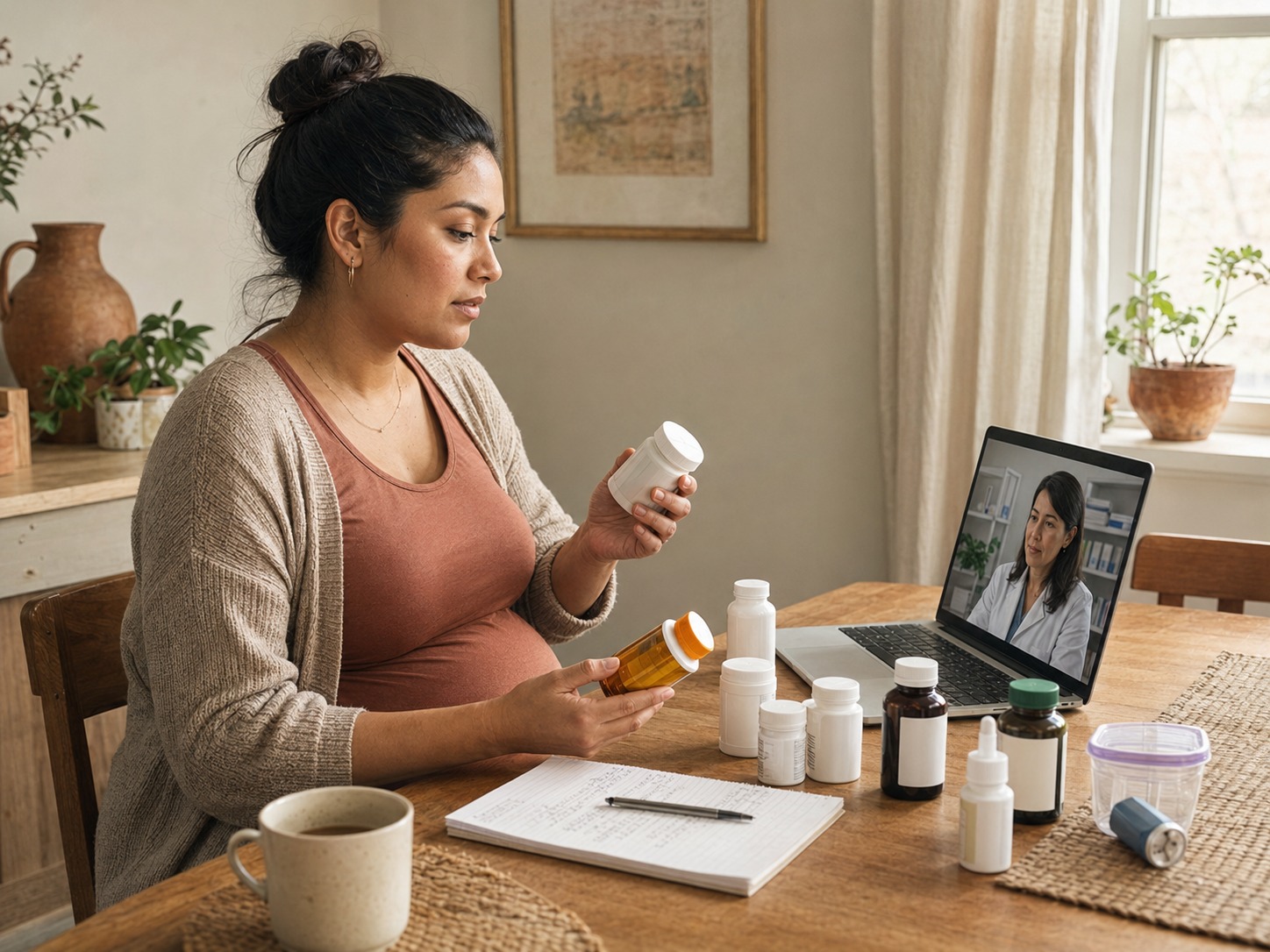
Bring a complete list
Include prescriptions, occasional pain relievers, allergy medicines, vitamins, sleep aids, herbal products, creams, and recreational substances. Note dose, frequency, and why you use each item.
Ask a balanced set of questions
A useful conversation includes both treatment and non-treatment risks.
- What do we know about this medicine at this stage?
- What could happen if my condition is not treated?
- Is a different dose or option appropriate?
- What symptoms or side effects should prompt a call?
Include products that do not feel like medicine
A complete review includes vitamins, herbal products, teas, topical creams, sleep aids, pain relievers, allergy products, cannabis or CBD products, and anything taken only occasionally. ‘Natural’ does not automatically mean safe, and limited evidence does not automatically mean a product is harmful.
- Product and ingredient name
- Dose and frequency
- Reason for use
- When it was started
- What happens if it is stopped
Create a decision record
Write down who recommended the plan, what benefit is expected, what uncertainty remains, and when it should be reviewed. This is especially useful when more than one clinician is involved.