Everyday field guide
Adapt movement to the pregnancy you are having
Movement can support well-being during pregnancy, but the useful plan is the one that fits your health, experience, access, symptoms, and care team's advice.
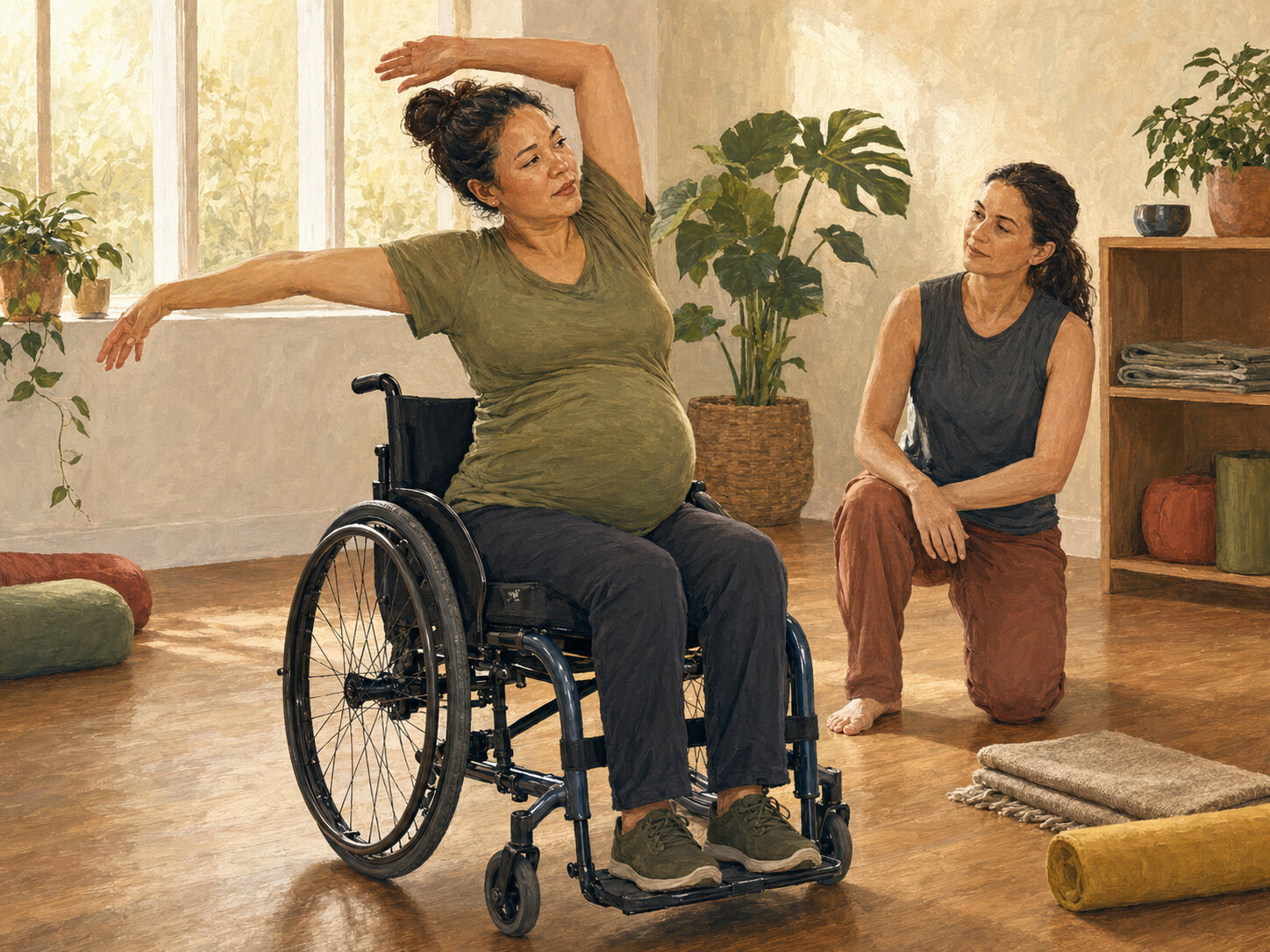
Use capacity, not comparison
Pregnancy is not the moment to prove consistency against someone else's routine. Notice how an activity feels during and after, and adjust duration, intensity, position, or support.
- Choose stable surfaces and appropriate equipment
- Build in hydration, temperature awareness, and recovery
- Modify movements as balance and comfort change
Ask about your circumstances
General activity guidance does not override restrictions related to complications, symptoms, disability, pain, or a clinician's individual recommendation.
Treat rest as part of the plan
Rest, sleep, mobility aids, physical therapy, and asking for help are not failures of fitness. The goal is sustainable daily function and well-being.
Build a menu instead of one perfect routine
Create short, medium, and low-energy movement options. A ten-minute walk, seated mobility practice, pool session, supported strength work, or physical-therapy exercise may each fit on a different day. This makes adaptation part of the plan rather than a sign that the plan failed.
Bring pain and function into prenatal care
Describe where discomfort occurs, what triggers it, whether it limits walking or sleep, and what you have already tried. Ask whether physical therapy, pelvic-health care, mobility aids, workplace changes, or other support is appropriate.