Independent buying framework
Buy, borrow, or skip: a calmer pregnancy essentials guide
Pregnancy marketing can make ordinary uncertainty feel like a shopping emergency. Start with the decision, not the product: what problem are you solving, what evidence applies, and can you borrow, wait, or skip it safely?
Our commercial promise
Essential health information, warning signs, loss support, and care-access guidance are never sold. Product placement cannot determine editorial order, and no referral belongs inside urgent, miscarriage, complication, assault, or youth content.
There are no active affiliate links in this guide. If that changes, every paid or commission-bearing link will be labeled at the point of use and use appropriate sponsored-link attributes.
Pregnancy tests: timing matters more than packaging
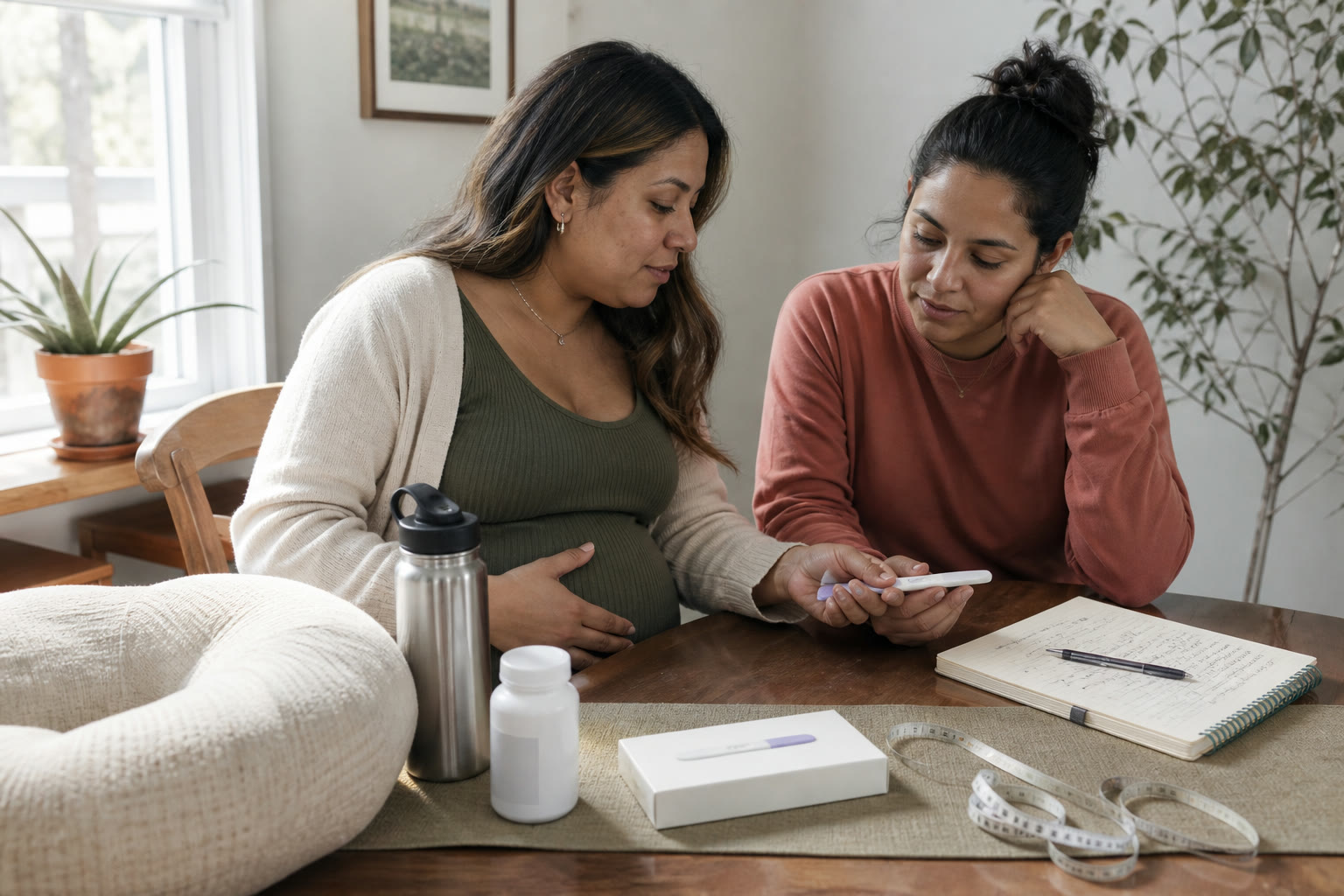
Choose an unexpired test from a reputable seller, confirm the control indicator, and follow the exact timing directions. Digital and line formats can differ in price and readability, but neither can show whether a pregnancy is located in the uterus or progressing normally.
Buying a large pack can make sense for repeated early testing, but waiting several days after a negative result may be more informative than testing many times in one day.
Ovulation tests predict an LH surge, not fertility
Urine ovulation tests can help identify the LH surge before expected ovulation. They do not prove that an egg was released, measure egg quality, assess sperm, show that the tubes are open, or guarantee pregnancy.
Before paying for a connected tracker or subscription, ask whether the added data will change what you do. A simple test may answer the same narrow question.
Prenatal supplements need a health conversation
CDC recommends 400 micrograms of folic acid daily for people who can become pregnant. Individual needs can differ, and more is not automatically better.
Bring the complete label to a clinician or pharmacist. Ask about folic acid, iron, iodine, vitamin D, interactions, nausea, swallowing difficulty, allergies, and whether a gummy or specialty formula leaves out something important.
- Do not use ‘natural’ as a safety claim.
- Avoid stacking multiple products with overlapping ingredients.
- Check the serving size, not only the front label.
- A product on a shelf is not proof of effectiveness for every claim.
Comfort items should solve a current problem
A pillow, support garment, water bottle, shoe, stool, or sleep accessory is useful only if it fits the person, stage, symptom, space, and care guidance. Borrow when hygiene and safety allow, buy used when condition can be inspected, and wait when the need is hypothetical.
Return policies, washable covers, size range, material sensitivity, disability access, heat, travel, and storage often matter more than influencer popularity.